About Chinese Herbal Medicine
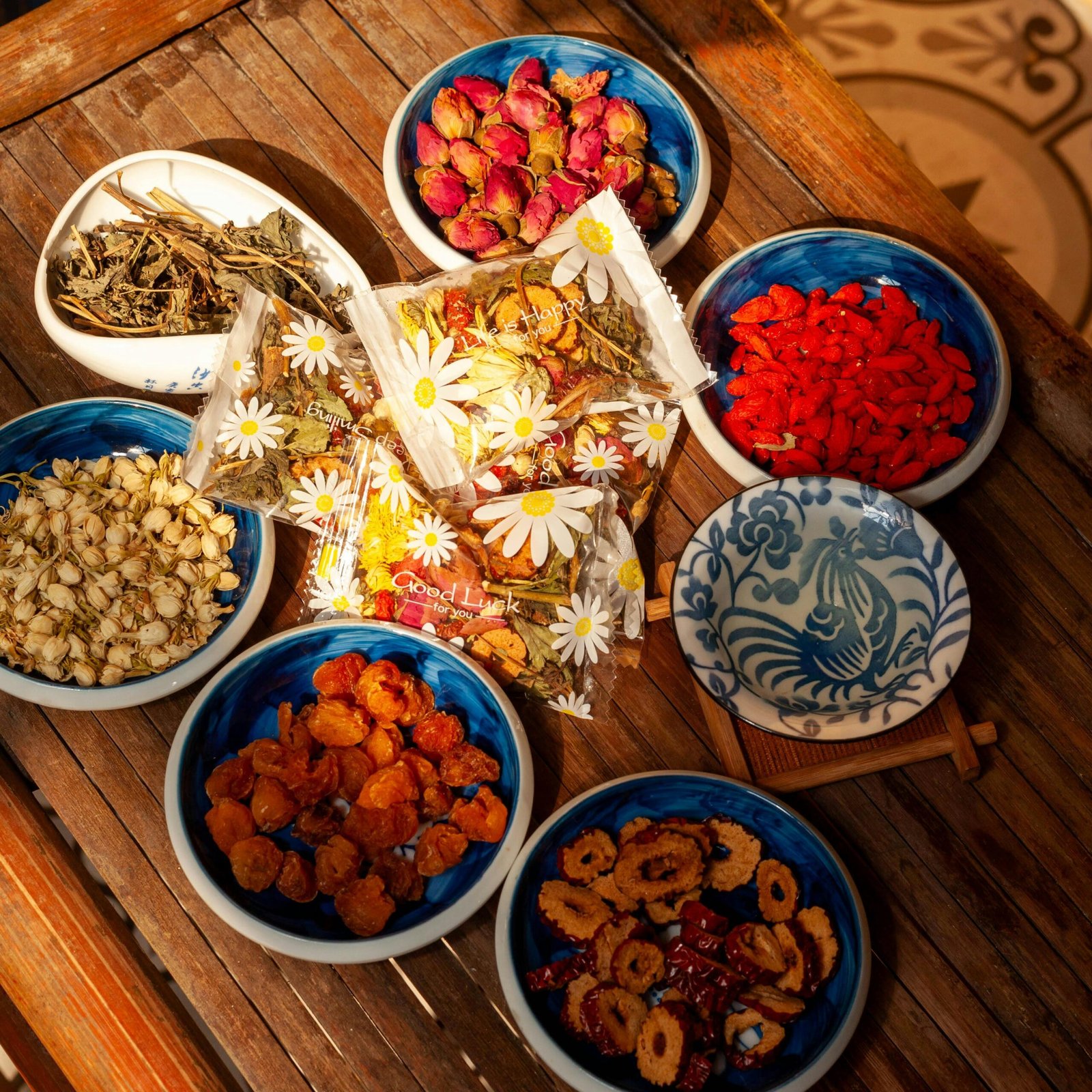
Chinese Herbal Medicine involves the use of Chinese herbs (often from plants & minerals) often in a customized formula to properly address a patient’s medical condition from a TCM diagnosis. Herbal formulas may come in a variety of forms from raw, granules, pills, and liquid tinctures.
HISTORY OF CHINESE HERBAL MEDICINE
The history of Chinese herbal remedies stretches back some 3,000 to 5,000 years, going back to village folk shamans who knew how to diagnose imbalances in the human body and correct with different herbs or combinations of herbs. It was also common for herbalists to add herbs to food recipes, especially soups and stews, in a practice often called “food as medicine”. You can still appreciate this in Chinese food recipes like congees (porridge often made from slow cooked rice, millet, or barley), where herbs like ginger and red dates are added for their properties to warm the body or nourish the blood like when someone is weak or anemic.
CHINESE HERBAL TRAINING
Training for Chinese herbal medicine in the United States is mainly found in accredited graduate schools of Traditional Chinese Medicine, where besides studying acupuncture and Chinese medical diagnosis, the student takes many courses learning both “single herbs” and “classic formulas” (herbal combinations to treat specific medical conditions). The training is rigorous, as students learn the properties of about 300-400 single herbs and 100-250 herbal formulas and internal medicine diagnostics to learn how to prescribe the Chinese herbs. Students also formalize their studies with clinical hours under supervision of Traditional Chinese Medicine doctors, where they learn to prescribe herbs and herbal formulas for patients seeking herbal support for their ailments, often in addition to the acupuncture treatments.
Dr. Rodriguez’s training at the International Institute of Chinese Medicine in Albuquerque, New Mexico, entailed learning this way, from many Chinese doctors who mentored her in learning the herbs, herbal formulas and how to tailor classical formulas to best address the medical conditions of her patients as a student intern. After formal training in graduate school, Dr. Rodriguez took a national exam in Chinese Herbology to become board certified as a Chinese herbalist. She still remembers the almost 3 hour exam! In addition, she has continued to take continuing education courses to keep this national certification active and recently took a 26 hour course in herbal dietetics for cold & flu conditions, including COVID.